Peacekeepers attend medical course to reduce deaths in missions
Photos: Carolina Lessa
23th June 2023
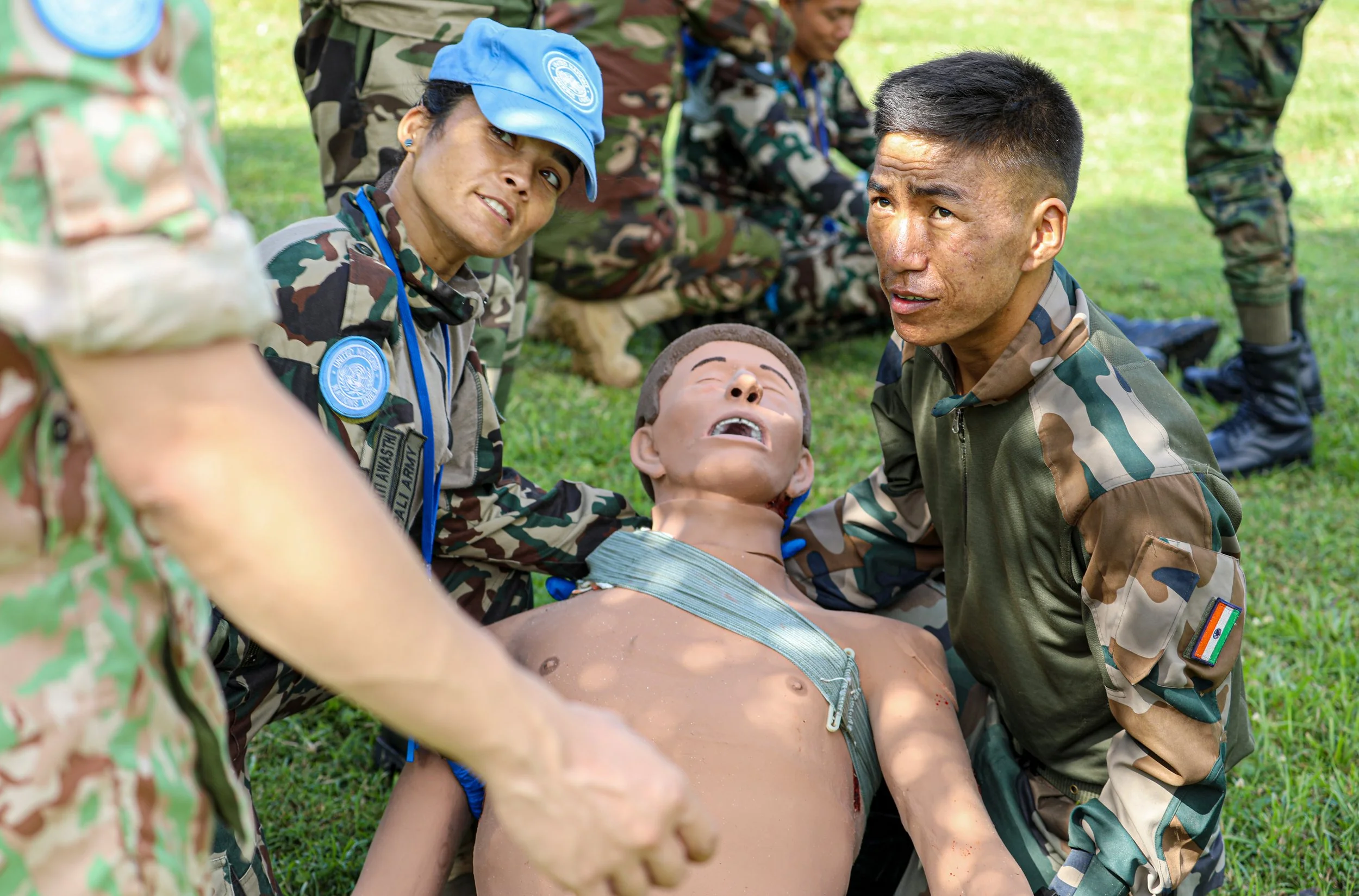
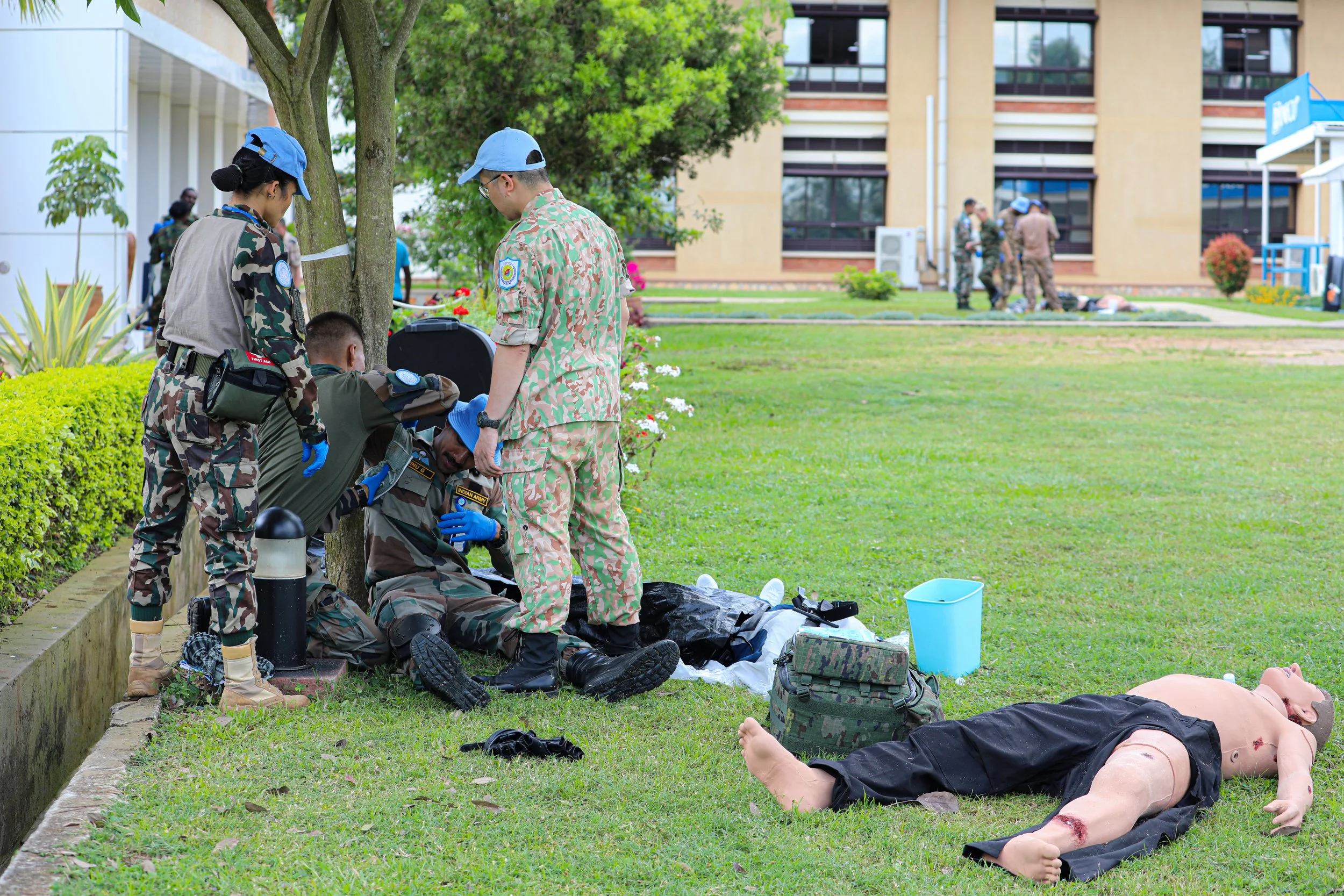
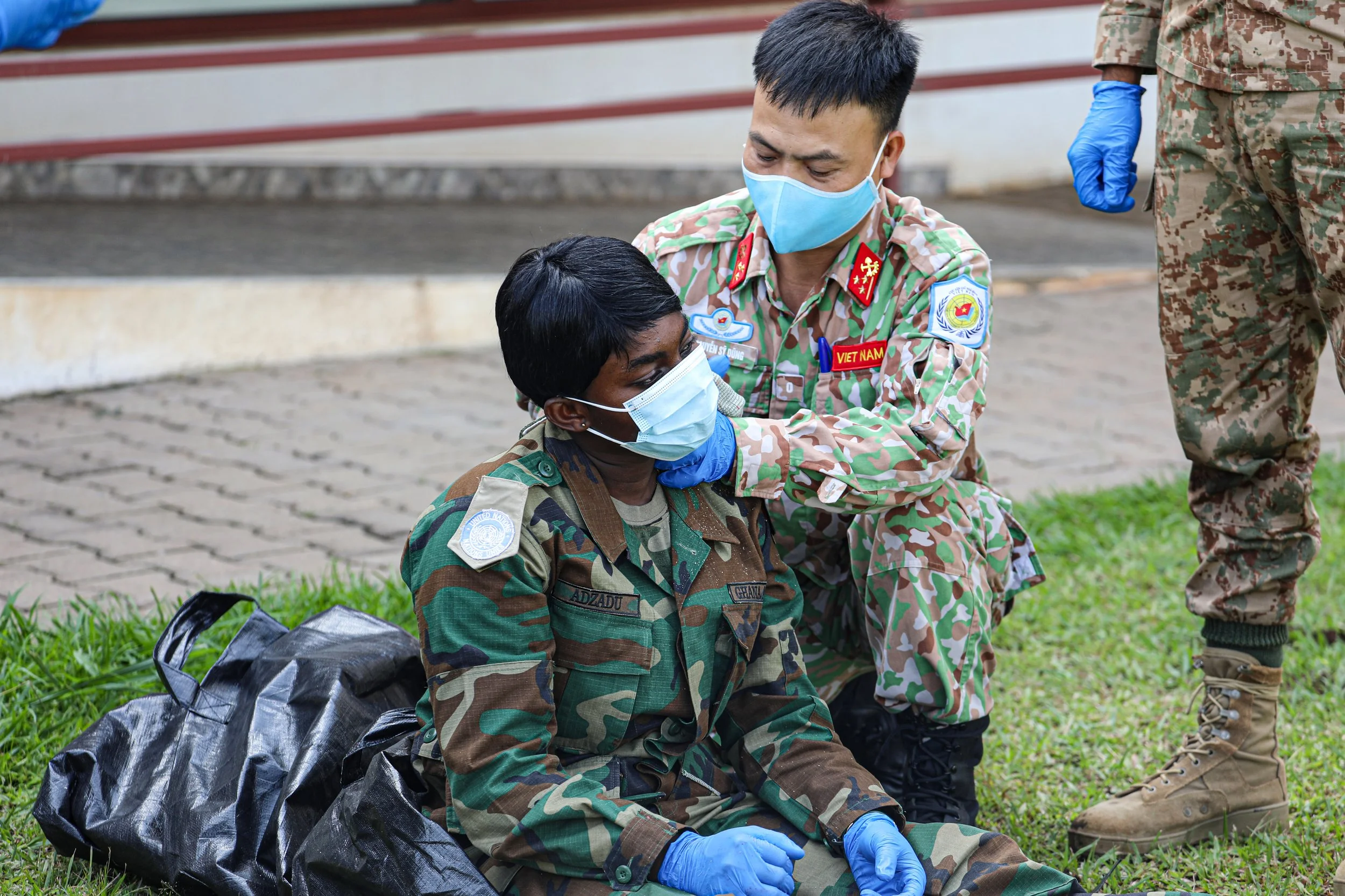
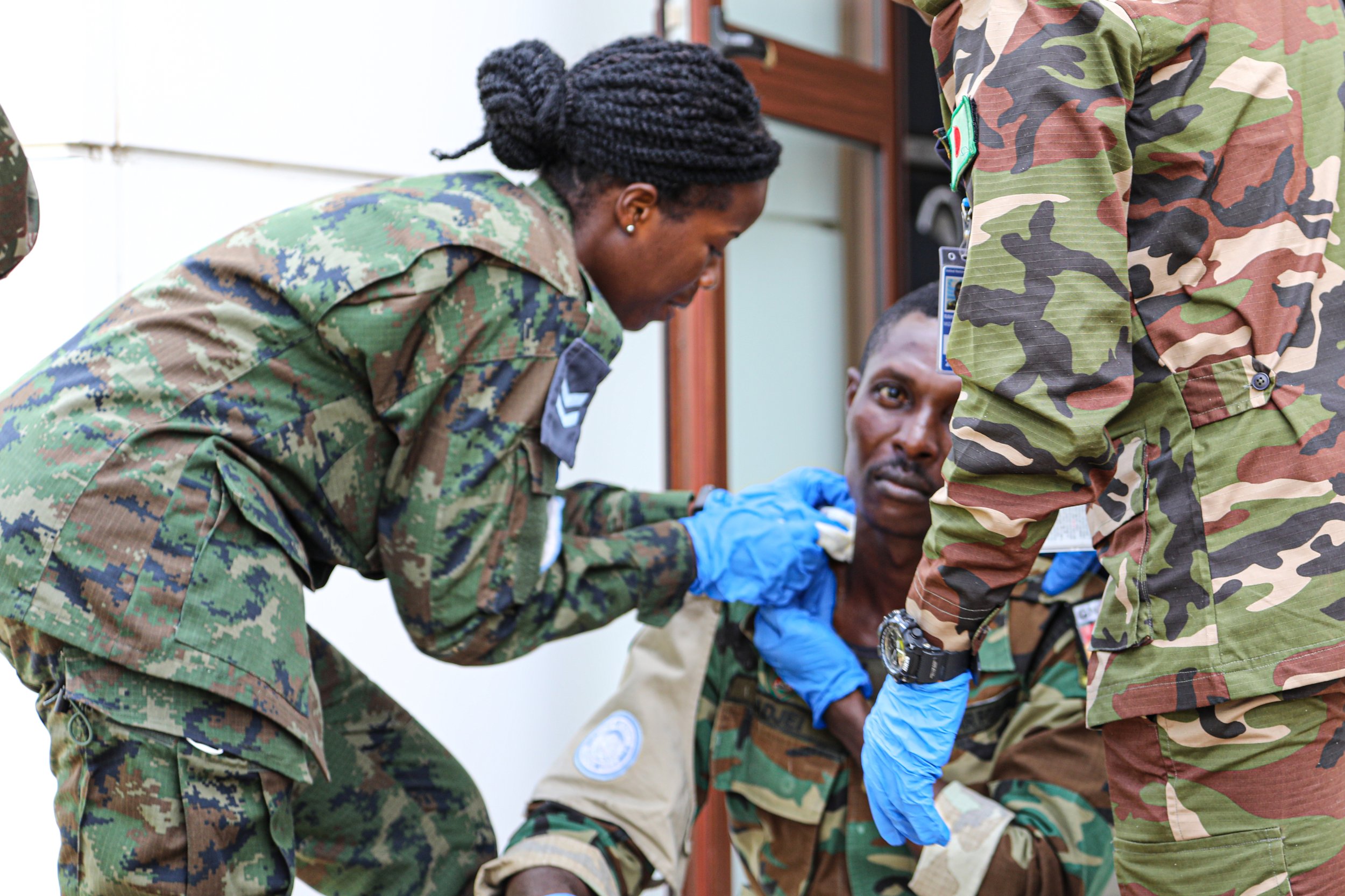
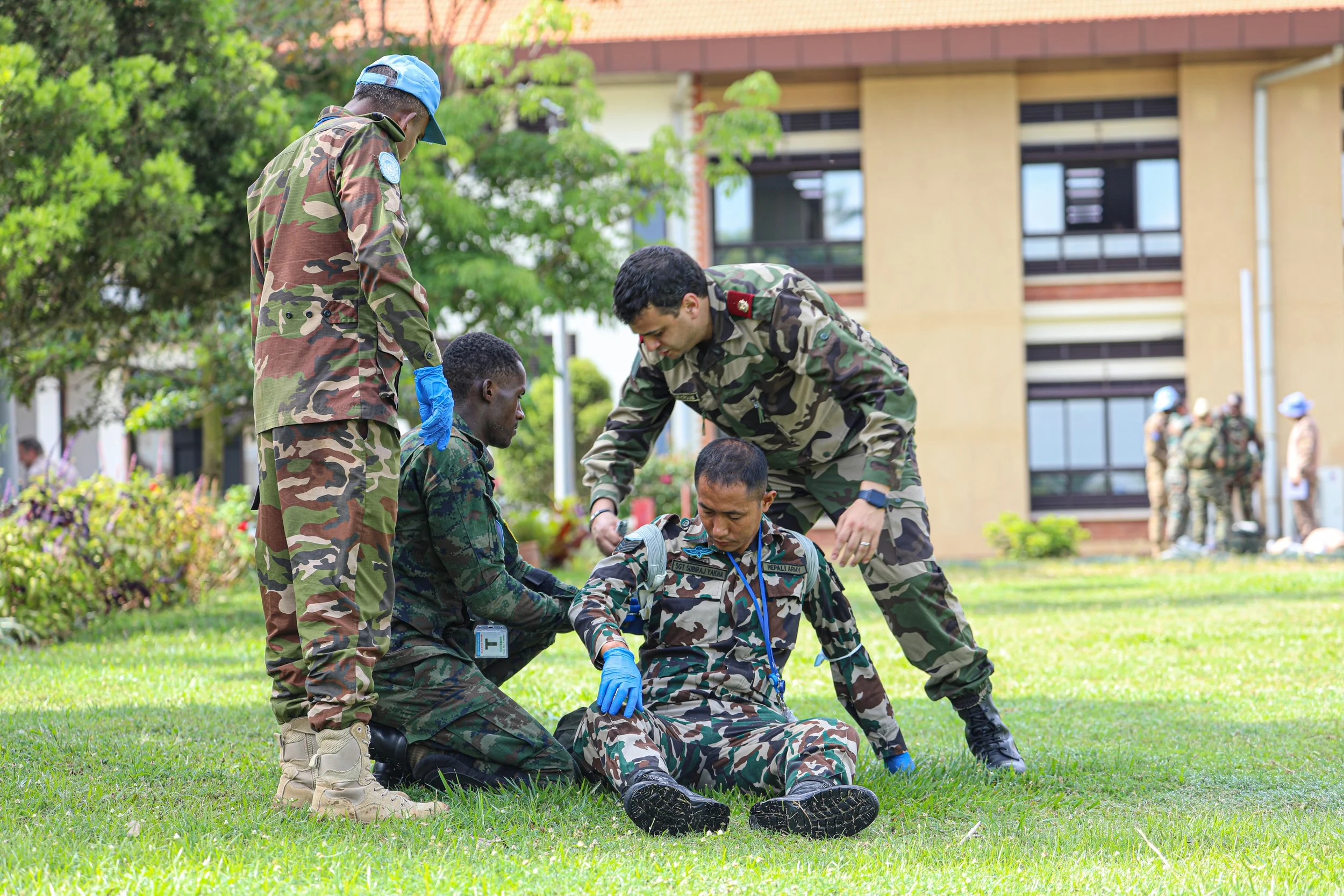
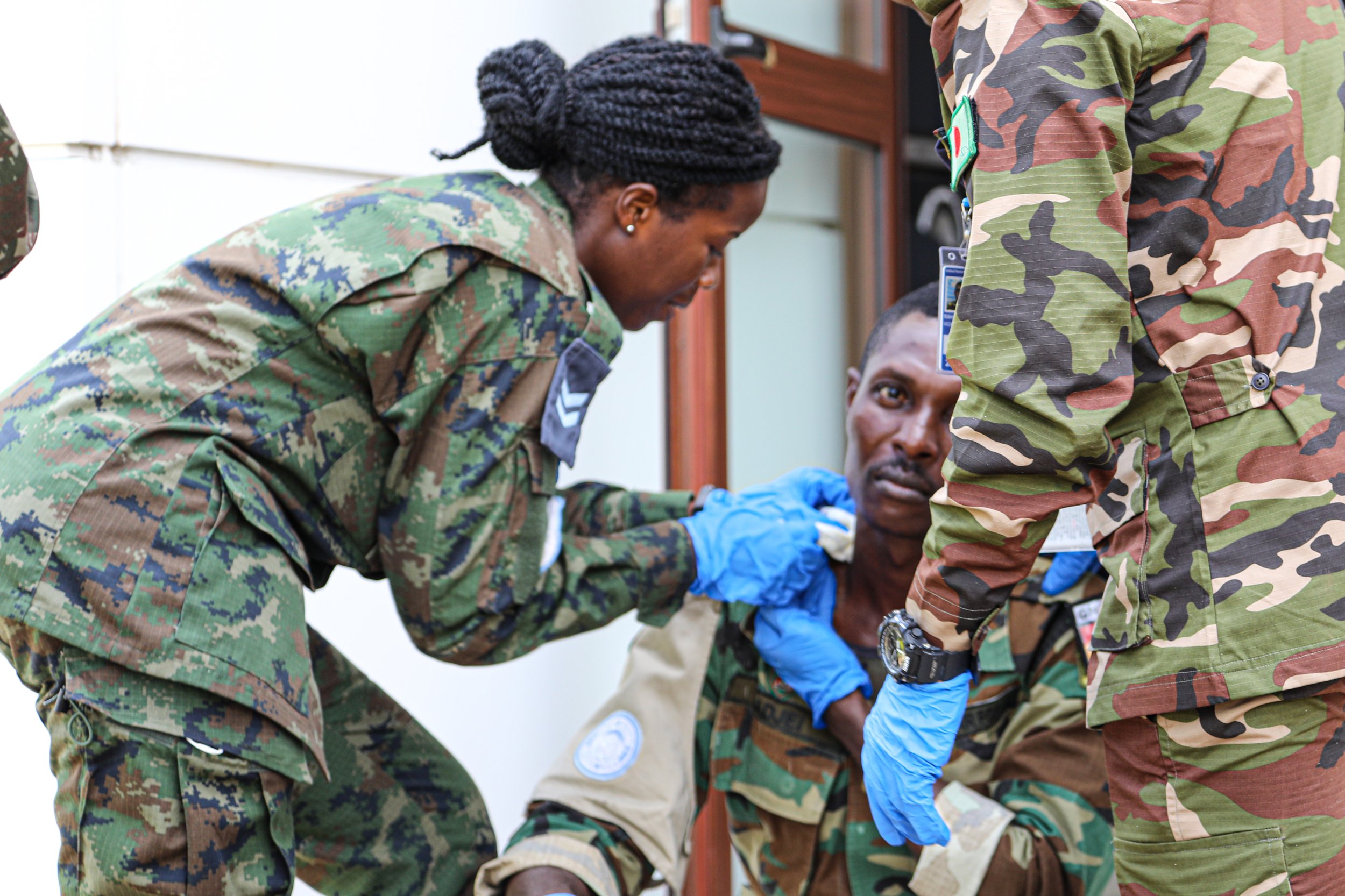
From 13 to 17 June, the Regional Service Centre Entebbe (RSCE) hosted the UN Field Medical Assistants Course (FMAC) in Uganda.
The course aims to increase survivability on missions by enhancing the emergency medical response skills and capabilities of peacekeepers in life-threatening situations.
“FMAC provides trainees with the knowledge, skills, and capability to perform life-saving interventions until professional health-care providers arrive,” explained Machiko Kawasaki, Medical Training Officer at the UN Department of Operational Support (DOS).
It was conducted by a Head Trainer and seven trainers’ candidates and attended by 21 uniformed personnel from UNMISS, UNISFA, and MONUSCO, of whom 17 were approved.
The trainees could learn from real situations they might face within the first hour after an accident. This can include massive bleeding, as described by the UNMISS trainee from Rwanda, Aline Niyigena.
“As we learned, the priority is to stop bleeding. We apply the tourniquet and then we check the airways to see if the casualty is breathing well.”
The course medical concept, provided by the U.S. Department of Defense Health Agency (DHA), was adapted by the UN Division of Health-Care Management and Occupational Safety and Health (DHMOSH) to address the specific needs of peacekeeping operations.
This was the second pilot of the FMAC. The first took place in 2019 and was attended by 29 uniformed peacekeepers from MONUSCO and UNMISS, with trainers from the UN, Belgium, Germany, and Japan.
About the Triangular Partnership Programme (TPP)
FMAC is organized by the UN Department of Operational Support (DOS) under the Triangular Partnership Programme (TPP). It aims to improve the ability of missions to operate effectively on the ground, contributing to the implementation of the Action for Peacekeeping (A4P) and A4P+.
Since its establishment in 2015, it has enhanced peacekeepers’ capacity in engineering, medical and C4ISR, and camp security technologies through the provision of training. It has also improved operational support and access to medical care in missions through telemedicine
Source: iSeek (UN Secretariat Intranet)
